
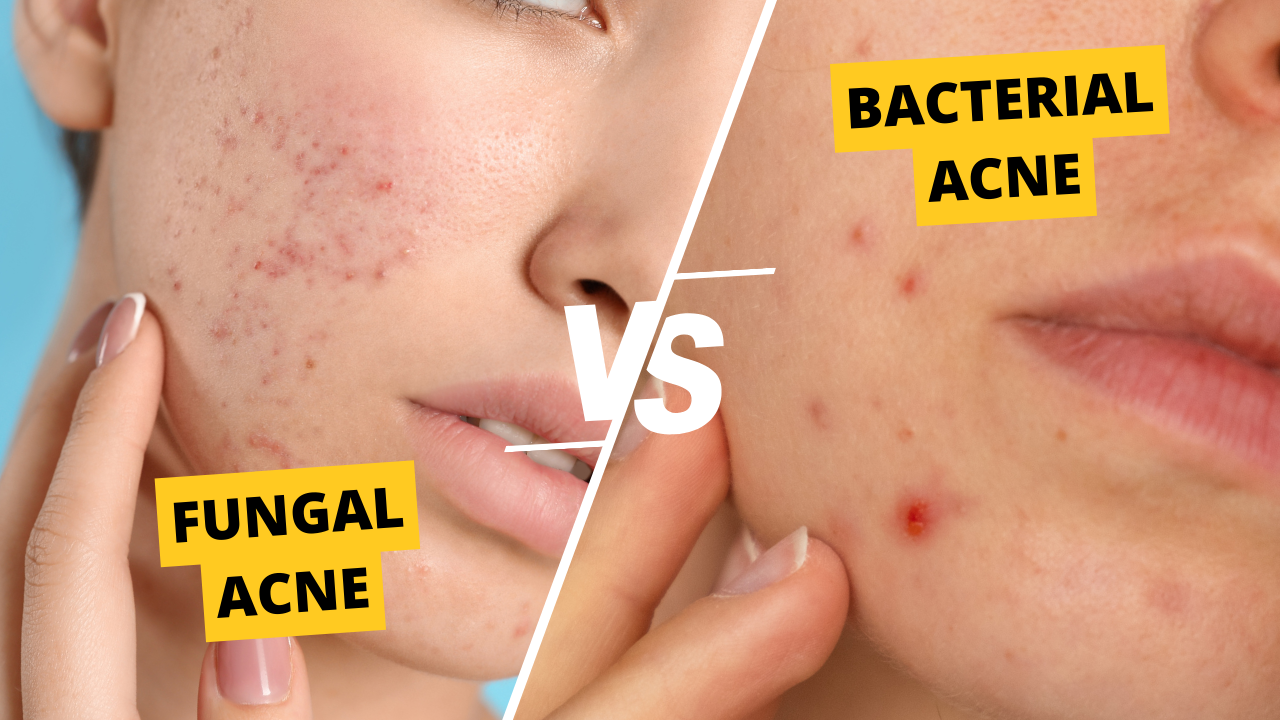
Although millions of individuals worldwide suffer from acne, not all cases of the skin condition derive from the same cause. The distinction between bacterial and fungal acne has become more widely acknowledged in recent years. Even though they both have comparable symptoms, it’s important to know how they differ to treat them effectively. Fungal acne is a form of acne brought on by excessive yeast growth on the skin.
Fungal acne often develops as small, homogeneous lumps or pustules that are frequently sensitive or irritating, in contrast to typical bacterial acne which generally does not present with itch. This type of acne may not have any whiteheads or blackheads and typically appears on the forehead, shoulders, chest, or back. Bacterial acne is the more common of the two. Bacterial acne is brought on by an abundance of bacteria, mostly Cutibacterium acnes, growing inside hair follicles. It shows up as nodules, cysts, papules, pustules, blackheads, and whiteheads.
Causes of Fungal Acne
● Humid Environments: Malassezia yeast thrives in warm, humid temperatures, which promotes the yeast’s expansion and the emergence of fungal acne.
● Occlusive skincare/hair products: Thick creams and oils have the potential to retain moisture and foster a fungal growth environment. Silicone-based hair products may also result in this type of acne as well.
● Excessive sweating: the presence of sweat on the skin, particularly on the back, forehead, and chest, can exacerbate the symptoms of fungal acne.
● Weak Immune System: Fungal infections and fungal acne are more common in those with compromised immune systems.
Symptoms of Fungal Acne
● Small, uniform bumps or pustules that are often itchy or tender.
● Clusters of bumps that may appear on the chest, back, shoulders, or forehead.
Treatment of Fungal Acne
- Antifungal Medications: Topical antifungal creams or oral antifungal medications prescribed by a clinician can effectively treat fungal acne by targeting the underlying yeast overgrowth.
- Avoid Occlusive Products: Steer clear of heavy creams, oils, or products containing ingredients like lanolin or petrolatum, which can exacerbate fungal acne.
- Keep Skin Dry: Staying dry and avoiding excessive sweating can help prevent the proliferation of Malassezia yeast.
Causes of Bacterial Acne:
- Overproduction of Sebum: Sebum is the skin’s natural oil, and too much of it can clog pores and stimulate the growth of bacteria.
- Clogged Pores: Excess oil and dead skin cells can build up inside hair follicles, clogging the pores and encouraging the growth of bacteria.
- Hormonal Changes: It can increase sebum production and worsen bacterial acne, particularly during puberty, menstruation, or pregnancy.
- Genetics: People who have a family history of acne may be more likely to develop bacterial acne.
Symptoms of Bacterial Acne
- Comedones (blackheads and whiteheads)
- Inflammatory lesions such as papules, pustules, nodules, and cysts.
- Redness and swelling around affected areas.
- Occasional pain or tenderness of pimples.
Treatment of Bacterial Acne:
- Topical Treatments: Salicylic acid, benzoyl peroxide, retinoids, and other medications can help reduce acne-causing germs and unclog pores in topical treatments that are available over the counter or through prescription.
- Oral Medications: In cases of hormonal or moderate-to-severe acne, a dermatologist may prescribe oral contraceptives, oral antibiotics, or even oral isotretinoin, to decrease the hormonal influence causing acne and prevent further breakouts.
- Professional Medical Treatment: For severe or unresponsive bacterial acne, treatments such as chemical peels, microdermabrasion, or laser therapy may be suggested.
- Consistent skin care regimen: Managing bacterial acne and preventing flare-ups can be achieved by establishing a regimen that includes light cleansing, moisturizing, and protection from the sun to avoid dark spots at the site of blemishes.
The Lucid Protocol
While fungal acne and bacterial acne share some similarities in their presentation, they are distinct conditions with different underlying causes and treatment approaches. Here at Lucid Dermatology, we pride ourselves in our ability to treat all types of acne. After obtaining a thorough history from our patients regarding symptoms and onset we will differentiate the type of acne that is presenting. If we determine that the blemishes likely have a fungal cause, we will prescribe antifungal and/or anti-inflammatory treatment.
In the case of bacterial acne, we treat it with antibacterial medications and sometimes treatments that encourage faster skin turnover which will improve texture. These interventions include chemical peels and exfoliative medications, among other treatment modalities. In both situations we offer proper counseling and monitor progress over time, tailoring our regimen according to our patient’s response.