
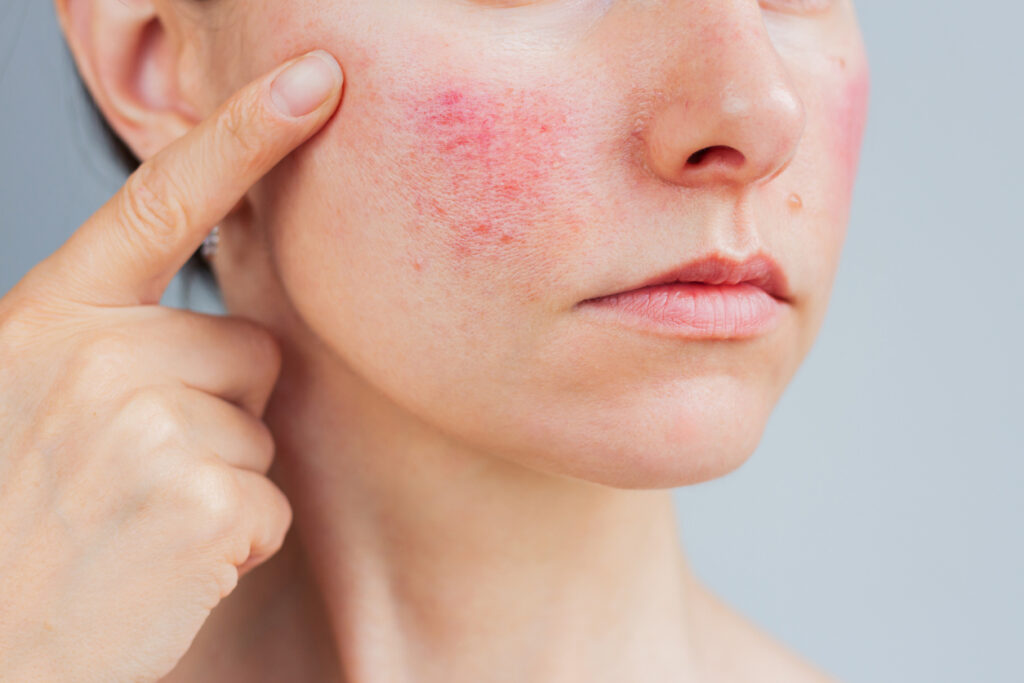
Rosacea flare-ups can be set off by everyday factors such as sunlight, heat, stress, alcohol, and spicy foods. Because triggers vary from one person to another, learning what causes your redness, flushing, or irritation may make the condition easier to manage.
With offices in Jamaica, Elmhurst, and the Bronx, NY, Lucid Dermatology cares for a wide range of medical skin concerns, including rosacea. The team includes Dr. Omar Noor, a board-certified dermatologist with experience in medical, surgical, and cosmetic dermatology.
Listed below are five potential triggers to be aware of.
1. Sun Exposure
Sunlight is one of the most frequently reported rosacea triggers. Even a relatively short period outdoors can bring on flushing or make existing facial redness more noticeable.
Daily sun protection is especially helpful if your skin reacts easily. Shade, protective clothing, and sunscreen reduce exposure while you’re outside.
2. Heat and Temperature Changes
Hot weather, indoor heat, hot baths, and other situations that raise your body temperature can lead to a flare. Cold weather and wind may also irritate sensitive skin, so rosacea isn’t only a warm-weather concern.
Pay attention to how your skin reacts during seasonal changes, exercise, showers, and time spent in heated spaces.
3. Emotional Stress
Stress can trigger flushing in some people with rosacea. A busy workday, lack of sleep, or an emotionally intense situation could coincide with a noticeable increase in redness.
4. Alcohol
Alcohol, particularly red wine, is another well-known trigger. You might experience warmth, flushing, or increased redness shortly after drinking. That doesn’t mean everyone with rosacea has to avoid alcohol completely, but it’s worth noticing which beverages affect your skin and how much it takes to cause a reaction.
5. Spicy Foods and Hot Drinks
Spicy meals make some people feel warm or flushed, which can aggravate rosacea symptoms. Heated beverages may cause similar problems for certain people.
Rather than eliminating foods at random, consider keeping a simple diary of what you eat and drink and when your skin flares. Over time, you can get a clearer picture of your individual triggers.
Get Help Managing Rosacea Flare-Ups
Trigger avoidance is only one part of the equation. Lucid Dermatology also uses treatments such as prescription topical medications, oral antibiotics, and laser or light-based therapies depending on your symptoms and rosacea subtype.
For help controlling rosacea, contact us at Lucid Dermatology. Dr. Omar Noor and the dermatology team serve Jamaica, Elmhurst, and the Bronx, NY. You can reach the office at 929-223-7740.